


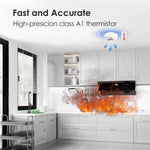


Description
×


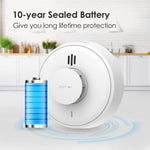
10 Years Battery Life
Built-in lithium battery with 10-year lifespan, no frequent battery replacement needed.
Reduces Kitchen False Alarms
Built-in high-precision thermistor, triggers alarm at 54°C-65°C, reduces false alarms from kitchen dust and smoke.


Product Features
Product Features
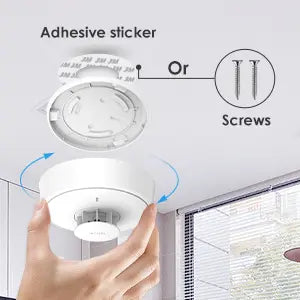
Rotate to Power on
With the special structure design, just rotate the detector and fixit on the mounting bracket

Over85 dB(A) Siren
The heat alarm has a sufficiently loud sound output and it is able to notice you a abnormal temperature
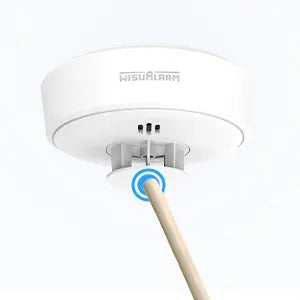
Make Test Simple
Integrate a large central test button for easy testing and muting
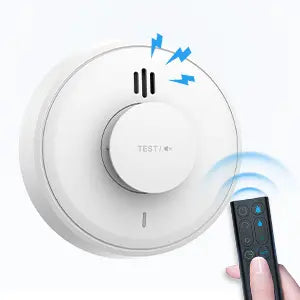
Remote Control
You can easily mute alarm by your home TV remote controller
Specification
Specification
| Model | H01 |
|---|---|
| Collection Type | Temperature |
| Sampling Period | 10 s |
| Sensor Type | Thermistor |
| Silencing Function | Yes |
| Power Source | 3V CR123A lithium battery (non-replaceable) |
| Battery Life | 10 years |
| Operating Temperature | -10°C to +55°C (+14°F to +131°F) |
| Dimensions | φ93.8mm × H46.9mm (φ3.69" × H1.85") |
| Weight | 115 g |
FAQ
FAQ
How does a heat alarm differ from a smoke alarm?
A heat alarm is designed to detect high levels of heat, whereas a smoke alarm is specifically designed to detect smoke particles in the air. So, a heat alarm may be more suitable for areas with high humidity or where smokeless fires are more likely.
Can a heat alarm detect all types of fires, including fast-burning fires?
Heat alarms are specifically designed to detect increases in temperature, so they may not be as reliable in detecting fast-burning fires or fires with low heat emission. It's crucial to have a combination of smoke alarms and heat alarms for comprehensive fire safety.
Are heat alarms suitable for kitchens or other areas with high levels of heat and steam?
Yes, heat alarms are ideal for kitchens or areas with high heat and steam, where smoke alarms might give false alarms due to cooking activities. However, it's important to ensure that the heat alarm is positioned away from direct steam sources to avoid false activations.
What is the recommended placement for a heat alarm in a home or business?
It's generally recommended to install a heat alarm in areas where smoke alarms might give false alarms, such as kitchens, garages, or dusty environments like workshops. Additionally, it's a good idea to have them installed near potential fire hazards like electrical panels or furnaces.
How long will I receive the detector?
Generally speaking, the order processing time is 1-3 working days, and the logistics transportation time is 1-5 working days, depending on the distance of the destination from our German warehouse.