Alarme de chaleur autonome à batterie scellée, 10 ans
Class A1 Fire Detection
10-year Battery Lifetime
Easy Test and Silence
BS 5839-6:2019 Grade F1
£17.99Prix régulier£23.99Prix réduit
Prix unitaire/ par
Sale
SKU: H01-R8
Alarme de chaleur interconnectée sans fil
Wireless interconnected
Low battery warning signal
Link up to 24 devices
BS 5839-6:2019 Grade F1
£22.99Prix régulier£24.00Prix réduit
Prix unitaire/ par
Sale
16%OFF
SKU: KIT1-2S1H-R8
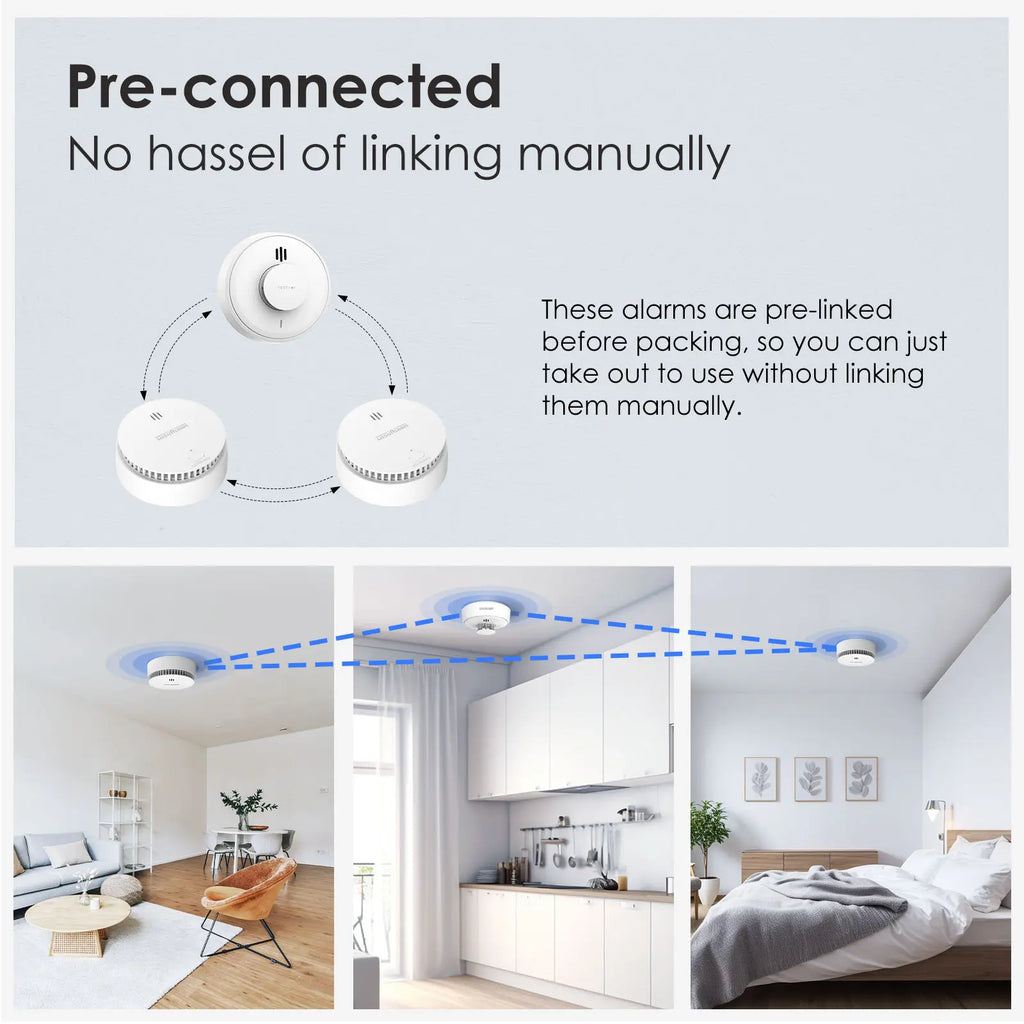
3PC Interlinked Smoke and Heat Alarm
Pre-connected Set
High Performance
5 Years Warranty
Scottish 2022 Legislation
£49.99Prix régulier£59.99Prix réduit
Prix unitaire/ par
Sale
14%OFF
SKU: KIT1-1S1C1H-R8
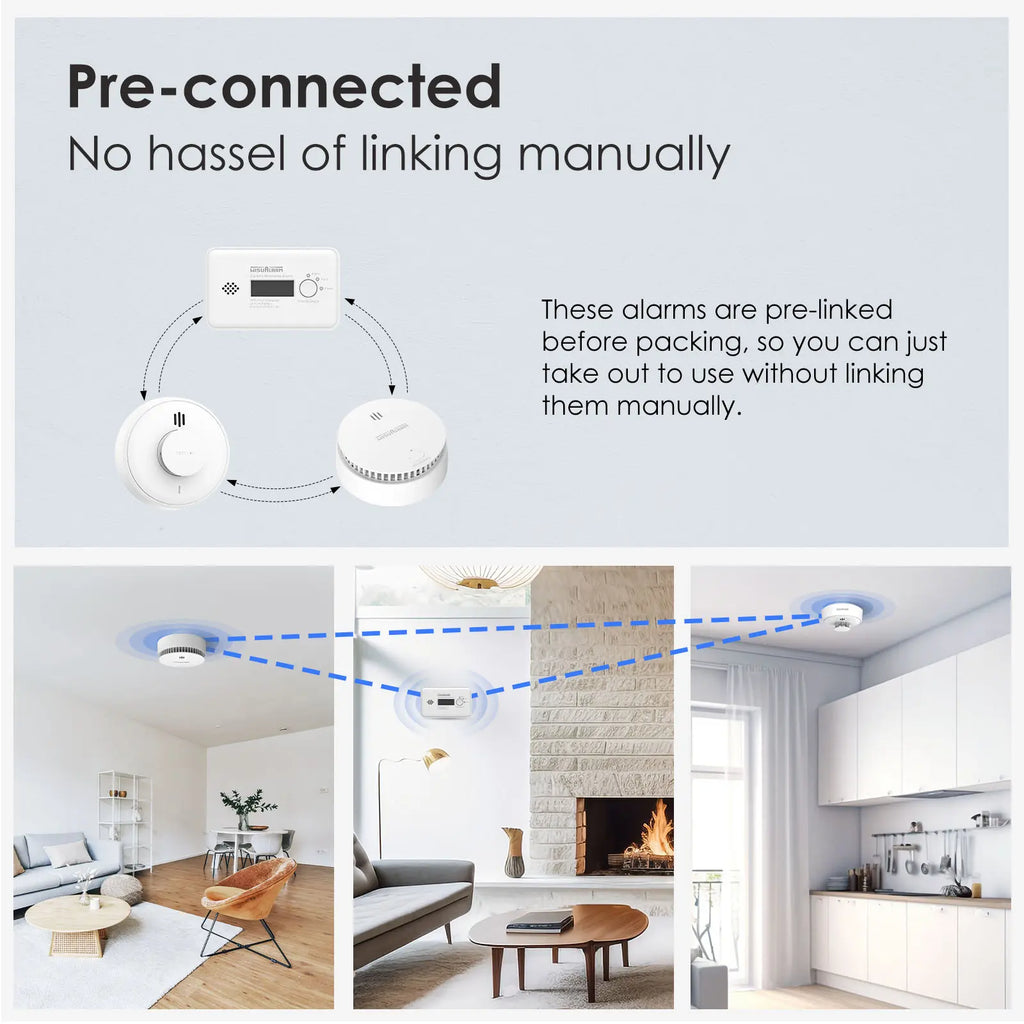
3PC Interlinked Smoke & CO & Heat Alarm
Pre-connected set
Link up to 24 devices
Simple Installation
BS 5839-6: 2019 Grade F1
£59.99Prix régulier£69.99Prix réduit
Prix unitaire/ par
SKU: BD-3S1H-R8
4PC Interlinked Smoke And Heat Alarms
Wireless Interconnected Kit
Connect to 24 devices
5 Years warranty
BS 5839-6:2019 Grade F1
£79.99Prix régulierPrix réduit
Prix unitaire/ par
Sale
SKU: BD-1G10S1C2H-R8
Gateway and 10 Smoke & 2 Heat & 1 CO Alarm
Smart Smoke Devices
More Comprehensive Pack
£219.00Prix régulier£259.00Prix réduit
Prix unitaire/ par
Heat Alarm
Designed to enhance home safety by detecting rapid increases in temperature. Ideal for kitchens and areas prone to cooking fumes, this alarm senses extreme heat levels and provides crucial early warnings to help prevent fires.

FAQ
FAQ
What is the difference between a heat detector and a smoke detector?
A heat detector responds to changes in temperature, typically activating an alarm when a certain temperature is reached or when there is a rapid increase in temperature. A smoke detector, on the other hand, detects smoke particles and activates when smoke is present, even at lower temperatures. Both serve different purposes and can be used together for better fire protection.
In what situations should I use a heat alarm instead of a smoke detector?
Heat alarms are ideal for locations where cooking or other activities may produce smoke that could trigger false alarms, such as kitchens, attics, and garages. They are also beneficial in areas with high humidity or dust, where smoke detectors might be less reliable.
Where should heat detectors be installed in my home or building?
Heat detectors should be installed in areas where smoke detectors may be less effective, such as kitchens, attics, and garages. They should be placed on the ceiling or high on the wall, at least 4 inches away from walls and other obstructions. Always follow the manufacturer's guidelines for specific installation locations.
How do I maintain my heat detector?
To maintain your heat detector, regularly check it at least once a month to ensure it is functioning properly. Clean the device with a soft brush or vacuum to remove dust and debris. Additionally, replace the batteries annually and replace the unit every 10 years to ensure optimal performance.
For many UK homeowners, home safety has traditionally been a "set and forget" affair. We’ve all been there: standing on a kitchen chair with a tea towel, waving it frantically...
Water – the lifeblood of our planet, essential for survival, yet paradoxically, one of the most destructive forces when it escapes its intended boundaries. From a tiny drip behind a...
As the festivities of December fade and the bitter British winter truly sets in, most of us have one priority: staying warm. In January, the heating is on full blast,...
For UK landlords, managing a rental property is no longer just about collecting rent and maintaining the fabric of a building. It is about compliance, safety, and fulfilling a profound...
The safety landscape for Scottish homeowners changed forever on February 1, 2022. While the legislation has been in place for a few years now, there is still significant confusion among...
Carbon monoxide (CO) is a silent, invisible killer. Odourless, colourless, and tasteless, it can be produced by everyday fuel-burning appliances in your home if they're faulty, poorly installed, or not...
It usually happens in the middle of the night—a sharp, piercing "chirp" that echoes through the hallway every 30 to 60 seconds. While it may be tempting to simply pull...
Carbon Monoxide (CO) is often referred to as the "silent killer." This colorless, odorless, and tasteless gas is a byproduct of incomplete combustion in fuel-burning appliances, such as furnaces, stoves,...
Few sounds are as unsettling as the persistent "chirp" or the piercing "siren" of a carbon monoxide (CO) alarm. In the UK, where gas boilers, wood burners, and gas fires...