





What Are the Latest Changes to UK Housing Safety Regulations in 2026?
UK housing safety remains a major focus for landlords, property managers and tenants in 2026. Two significant developments in October have brought renewed attention to building fire safety and the responsibilities of rental property providers.
On 14 October 2026, the government introduced the Building Safety (Remediation of Unsafe Cladding etc) Bill, proposing further measures to address unsafe external wall systems in residential buildings.
Just days earlier, on 9 October, the government launched a consultation on extending Awaab's Law to private rented homes and certain types of accommodation occupied under licence.
Although these developments are at different stages, they point towards a broader direction in UK housing policy: improving building safety, responding to serious hazards more quickly and strengthening accountability.
For landlords, understanding these changes is important—not only for future compliance, but also for reviewing existing property safety arrangements.
1. Building Safety (Remediation of Unsafe Cladding etc) Bill 2026
Introduced to Parliament on 14 October 2026, the Building Safety (Remediation of Unsafe Cladding etc) Bill aims to accelerate the removal of unsafe cladding and strengthen accountability for those responsible for building safety.
The proposed legislation focuses on residential buildings containing multiple dwellings, particularly those where external wall systems may present fire risks.
What Does the Bill Propose?
The proposed reforms include several important measures:
| Key Area | Proposed Changes |
|---|---|
| Cladding remediation | Strengthen requirements to assess and address unsafe external wall systems |
| Building registration | Introduce a register for certain medium-rise residential buildings |
| Responsible entities | Strengthen responsibilities for those accountable for building safety |
| Enforcement | Provide stronger enforcement powers and penalties |
| Construction products | Address liabilities involving unsafe construction products |
The proposals include a register for certain buildings between 11 and 18 metres in height, alongside further measures to improve information about residential buildings.
The Bill also proposes stronger enforcement, including penalties that could reach £500,000 and imprisonment of up to two years for certain offences.
However, it is important to distinguish between a Bill and an enacted law. As of November 2026, the legislation has been introduced to Parliament but has not yet completed the parliamentary process.
Official sources:
-
UK Government: Guide to the Building Safety (Remediation of Unsafe Cladding etc) Bill
-
UK Parliament: Building Safety (Remediation of Unsafe Cladding etc) Bill
2. Awaab's Law: Could It Apply to Private Landlords?
Another important development in October 2026 concerns Awaab's Law.
Named after Awaab Ishak, a two-year-old who tragically died following prolonged exposure to mould in his family's social rented home, the law was introduced to ensure that serious housing hazards are investigated and addressed within specified timeframes.
What Is the Current Position?
Awaab's Law has applied to social housing landlords since 27 October 2025.
It establishes requirements for investigating and addressing certain serious hazards, including significant damp and mould issues.
On 9 October 2026, the government published a consultation proposing to extend these protections to private rented tenancies and certain types of licensed accommodation.
The consultation considers:
-
Which housing hazards should be covered.
-
How landlords should investigate reported hazards.
-
How quickly serious hazards should be made safe.
-
How the requirements should be introduced.
The government has indicated that 2027 would be the earliest feasible implementation date for the private rented sector, although the final arrangements and timetable remain subject to consultation and further regulations.
The consultation is open until 18 December 2026.
What Could This Mean for Private Landlords?
If the proposals are implemented, private landlords may face clearer requirements for responding to serious hazards reported by tenants.
This could increase the importance of having effective property inspection, maintenance and safety procedures in place.
For landlords and property managers, it is sensible to review existing arrangements rather than wait until new requirements take effect.
Official source: UK Government: Extending Awaab's Law to private rented tenancies and to licences
3. Smoke and CO Alarm Requirements: What Should Landlords Check?
While the Cladding Bill and Awaab's Law are attracting attention, existing smoke and carbon monoxide alarm requirements remain an important part of rental property safety.
In England, the Smoke and Carbon Monoxide Alarm (Amendment) Regulations 2022 require private landlords to ensure that:
-
At least one smoke alarm is installed on each storey of a property used as living accommodation.
-
A carbon monoxide alarm is installed in each room used as living accommodation that contains a fixed combustion appliance, excluding gas cookers.
-
Faulty alarms are repaired or replaced once the landlord is informed and the fault is confirmed.
Landlords should also check that alarms are correctly positioned, working properly and maintained in accordance with the manufacturer's instructions.
Choosing Suitable Smoke, Heat and CO Alarms
For landlords looking to provide broader household protection, a combination of smoke, heat and carbon monoxide detection can help address different risks throughout a property.
Wisualarm offers a 5PC Interlinked Smoke, CO and Heat Alarm Kit, containing three smoke alarms, one carbon monoxide alarm and one heat alarm.
The alarms are pre-connected, allowing compatible units to sound together when one detects a hazard. The system supports up to 24 interconnected devices, making it an option worth considering for properties where coordinated alerts are important.
Explore the Wisualarm Interlinked Smoke, CO and Heat Alarm Kit
This type of interconnected arrangement can help occupants hear an alarm even when the initial hazard is detected in another part of the home.
It is important to remember that the correct number, type and positioning of alarms must still be determined according to the property layout and applicable regulations. A particular alarm kit does not automatically guarantee compliance.
4. Why Consider Wireless Interconnected Alarm Systems?
In multi-storey homes and larger rental properties, relying on standalone alarms may mean that occupants in distant rooms do not hear an alert as clearly.
Wireless interconnected alarms provide another approach: when one compatible detector is triggered, the other connected alarms also sound.
For landlords managing multiple rooms or larger properties, this can help provide a more coordinated warning system.
Adding Remote Monitoring with a Gateway
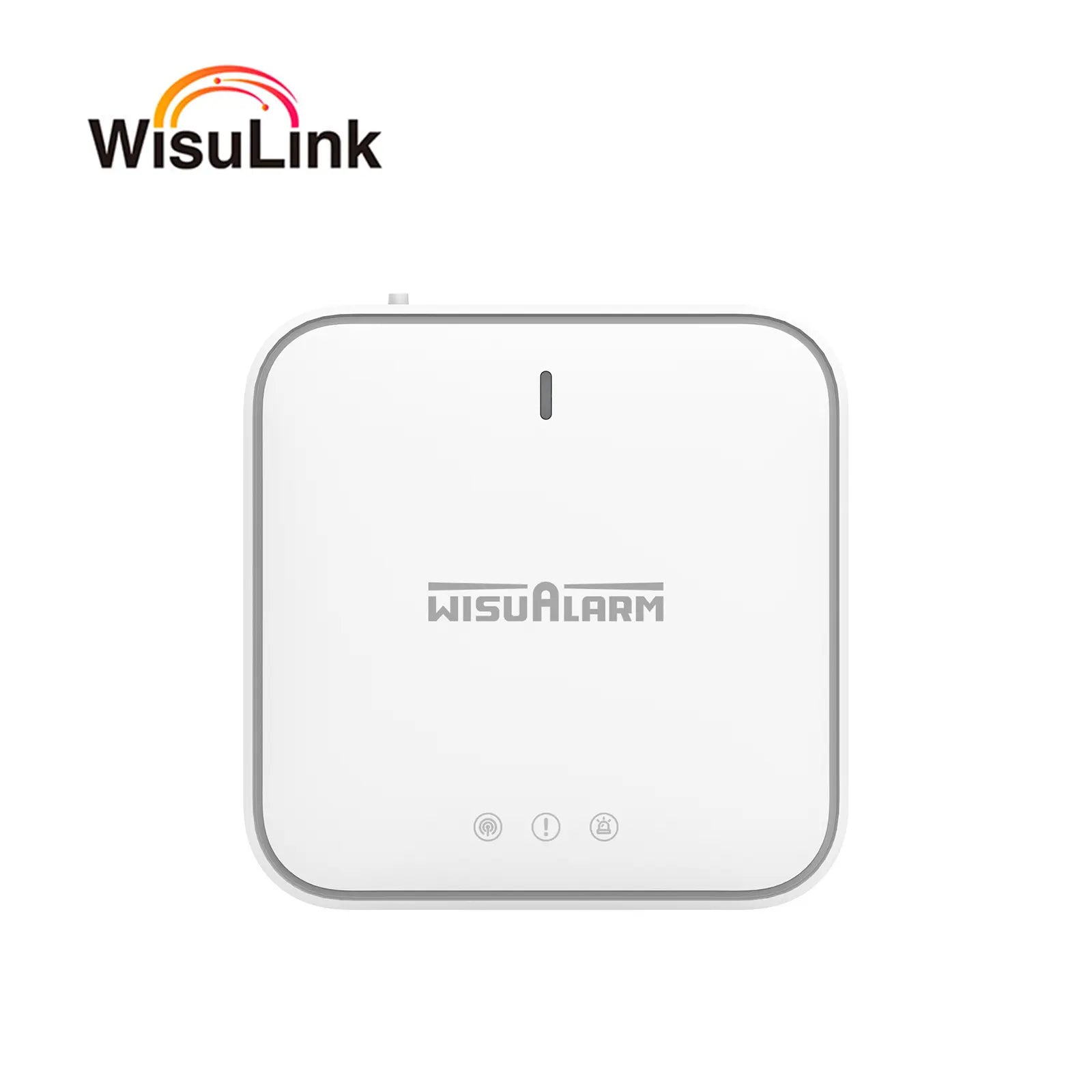
For property owners who want additional visibility when they are away from the property, a compatible gateway can connect supported alarms to the Wisualarm App.
Depending on the connected devices and network availability, users can:
-
Receive notifications when compatible alarms are triggered.
-
Check device status through the app.
-
Receive low-battery and fault notifications.
-
Test or manage supported devices remotely.
Wisualarm's Gateway and Smoke, CO and Heat Alarm Kit combines a gateway with interconnected detectors, providing both local alarm coordination and app-based monitoring.
Explore the Wisualarm Gateway and Smoke, CO and Heat Alarm Kit
For landlords, this can offer an additional way to stay informed about compatible alarm devices between property visits. However, remote notifications should complement—not replace—regular inspections, maintenance and statutory responsibilities.
5. What Should UK Landlords Do Now?
With further housing safety reforms under discussion, landlords can take practical steps to review their current arrangements.
| Area | Recommended Action |
|---|---|
| Building safety | Check whether the property could fall within the scope of the proposed cladding remediation measures |
| Smoke alarms | Confirm that the required alarms are installed on each relevant storey |
| CO alarms | Check rooms containing fixed combustion appliances, excluding gas cookers |
| Alarm maintenance | Test alarms regularly and arrange repairs or replacements when needed |
| Tenant reports | Establish a clear process for recording and responding to reported hazards |
| Property records | Keep inspection, maintenance and repair records up to date |
For landlords with multiple properties, maintaining consistent inspection and maintenance procedures can make it easier to identify problems and demonstrate that appropriate action has been taken.
The Cladding Remediation Bill and the proposed extension of Awaab's Law show that residential safety remains an important priority in UK housing policy.
Although the two developments focus on different issues, both reinforce the importance of identifying risks, maintaining safe living conditions and responding to potential hazards effectively.
For landlords, keeping up with regulatory developments is only one part of responsible property management. Reviewing smoke and CO alarm arrangements, maintaining reliable detection systems and keeping clear maintenance records are also practical steps towards safer rental homes.
6. Frequently Asked Questions
Is the Cladding Remediation Bill 2026 already law?
No. The Building Safety (Remediation of Unsafe Cladding etc) Bill was introduced to Parliament on 14 October 2026. It must complete the parliamentary process before becoming law.
Does Awaab's Law apply to private landlords?
Not yet. Awaab's Law has applied to social housing landlords since October 2025. The government launched a consultation in October 2026 on extending it to private rented tenancies. The earliest feasible implementation date indicated by the government is 2027.
Are smoke alarms mandatory in UK rental properties?
In England, private landlords must install at least one smoke alarm on every storey used as living accommodation. Different rules may apply in Scotland, Wales and Northern Ireland.
Do landlords need to install carbon monoxide alarms?
In England, landlords must install a carbon monoxide alarm in each room used as living accommodation that contains a fixed combustion appliance, excluding gas cookers.
Are interconnected smoke alarms a legal requirement?
The general smoke alarm requirements in England do not mean that every private rental property must use interconnected alarms. However, interconnected systems can provide coordinated warnings across different areas of a property and may be worth considering depending on the building and its occupants.
Can a Wisualarm Gateway notify landlords remotely?
A compatible Wisualarm Gateway can connect supported alarm devices to the Wisualarm App. This allows users to receive relevant notifications and check device status remotely, provided the gateway has been correctly configured and has an internet connection.



Laissez un commentaire