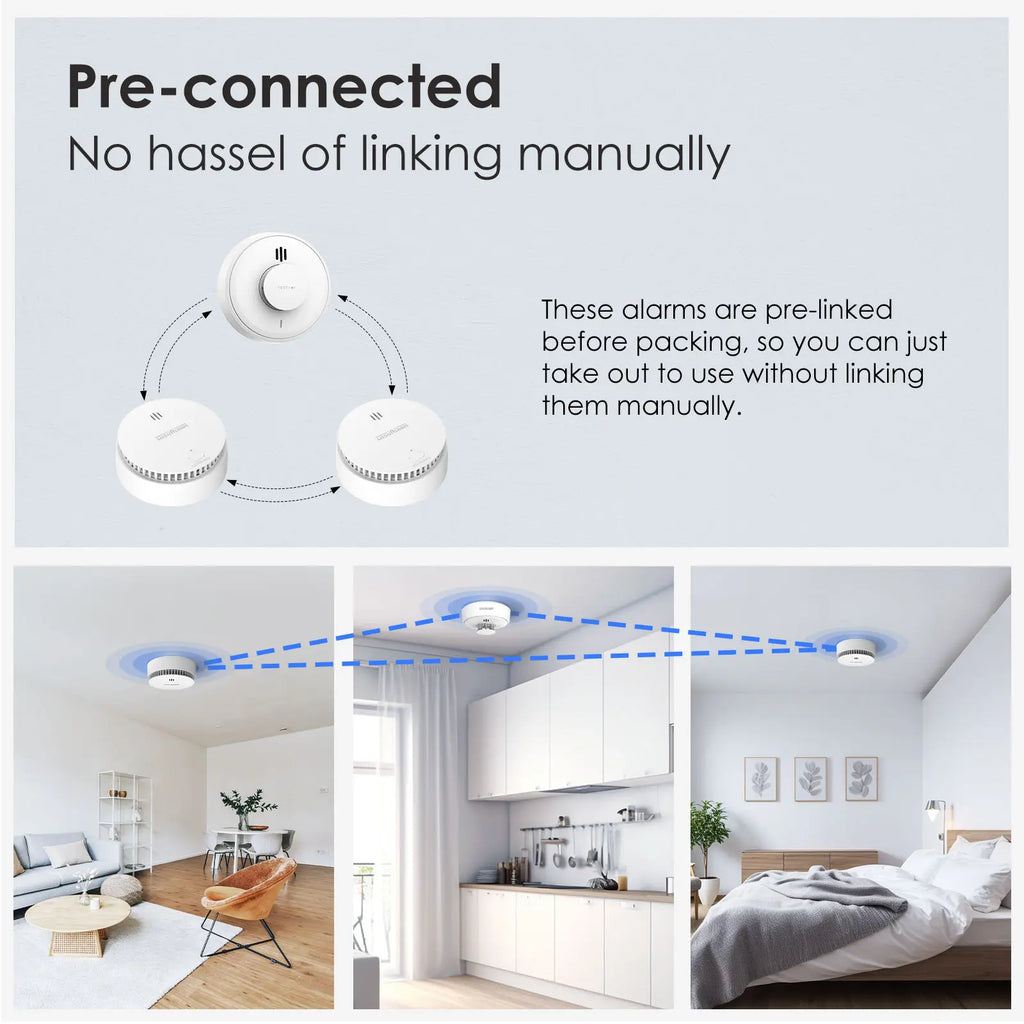
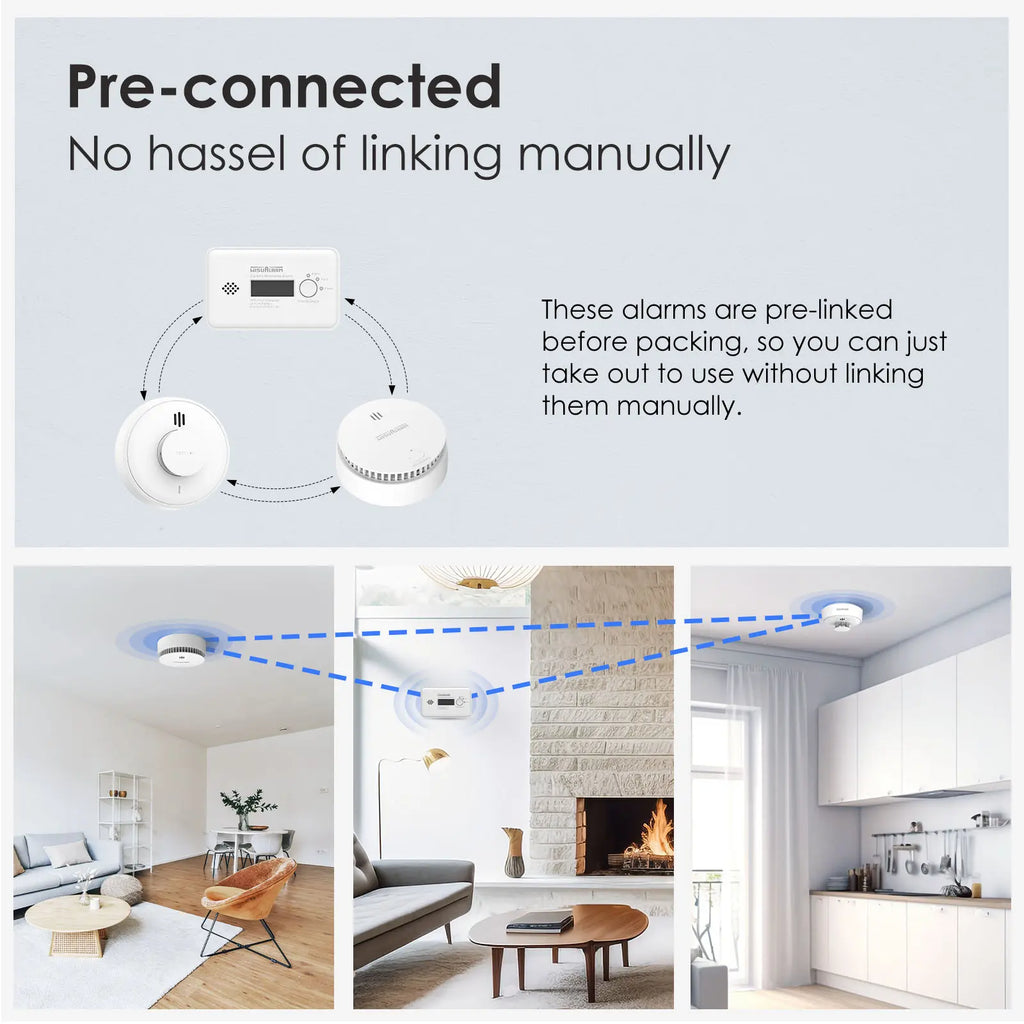
Designed to enhance home safety by detecting rapid increases in temperature. Ideal for kitchens and areas prone to cooking fumes, this alarm senses extreme heat levels and provides crucial early warnings to help prevent fires.
FAQ
FAQ
What is the difference between a heat detector and a smoke detector?
A heat detector responds to changes in temperature, typically activating an alarm when a certain temperature is reached or when there is a rapid increase in temperature. A smoke detector, on the other hand, detects smoke particles and activates when smoke is present, even at lower temperatures. Both serve different purposes and can be used together for better fire protection.
In what situations should I use a heat alarm instead of a smoke detector?
Heat alarms are ideal for locations where cooking or other activities may produce smoke that could trigger false alarms, such as kitchens, attics, and garages. They are also beneficial in areas with high humidity or dust, where smoke detectors might be less reliable.
Where should heat detectors be installed in my home or building?
Heat detectors should be installed in areas where smoke detectors may be less effective, such as kitchens, attics, and garages. They should be placed on the ceiling or high on the wall, at least 4 inches away from walls and other obstructions. Always follow the manufacturer's guidelines for specific installation locations.
How do I maintain my heat detector?
To maintain your heat detector, regularly check it at least once a month to ensure it is functioning properly. Clean the device with a soft brush or vacuum to remove dust and debris. Additionally, replace the batteries annually and replace the unit every 10 years to ensure optimal performance.
Yes, smoke alarms are fully recyclable in the UK, but they require specialist processing. Under United Kingdom environmental law, these devices are classified as Waste Electrical and Electronic Equipment (WEEE),...
Carbon monoxide (CO) is a colorless, odorless gas that can be extremely dangerous if not detected early. That's why having a carbon monoxide alarm in your home is crucial for...
When we think of home disasters, fire often comes to mind first. However, for the average UK homeowner, the most frequent and costly threat isn't smoke—it’s water. According to the...
For decades, home safety in the United Kingdom followed a simple, localized logic: if there is fire in the kitchen, the kitchen alarm sounds. However, as residential architecture has evolved...
In the United Kingdom, the traditional smoke alarm—that lonely plastic disc on the ceiling that occasionally chirps when you burn toast—is undergoing a quiet revolution. As we move through 2026,...
When we think about home fire safety, the first images that typically spring to mind are smoke alarms shrieking or a heavy red fire extinguisher standing in the corner. While...
In the realm of fire safety, technology has evolved far beyond the isolated "beeping box" on the ceiling. As we move through 2026, the global standard for residential protection has...
In the last decade, the landscape of home safety in the United Kingdom has shifted dramatically. As smart home technology becomes more integrated into our daily lives, the way we...
Introduction: Why Scotland is Leading the UK in Fire Safety In February 2022, Scotland implemented a landmark change in domestic safety legislation. Following the tragic Grenfell Tower fire, the Scottish...