




A smoke alarm is easy to test when you can reach it.
But what happens when your smoke alarm is installed on a high ceiling, above a staircase, or at the highest point of a vaulted room?

This is a practical problem that often gets overlooked. Recent Reddit discussions include homeowners dealing with smoke alarms installed on high or vaulted ceilings, with the real frustration starting when the alarm begins chirping or needs attention and there is no easy way to reach it.
One discussion about a detector at the peak of a vaulted ceiling focused on exactly this problem: the alarm itself wasn't necessarily the issue — access was.
For a hard-to-reach smoke alarm, therefore, detection is only part of the equation. Testing, maintenance and everyday management matter too.
Why Are High-Ceiling Smoke Alarms Harder to Manage?
A smoke detector on a high ceiling may be perfectly positioned for detection but difficult to access when it needs attention.
Typical maintenance tasks include:
- Testing the alarm
- Identifying which alarm has triggered
- Responding to nuisance alarms
- Checking battery or fault status
- Reaching the detector when physical maintenance is required
This becomes particularly noticeable in vaulted ceilings, high stairwells, double-height living rooms and other difficult-to-access spaces.
NFPA research on high-ceiling spaces also highlights accessibility for inspection, testing and maintenance as an important consideration when detectors are installed at height.
So the question isn't simply where the smoke alarm should be installed.
It is also how it will be managed once it is there.
What Features Matter for a Smoke Alarm on a High Ceiling?
1. Remote Test and Status Checking
For a detector that is difficult to reach, smoke alarm remote test can make routine maintenance much easier.
Instead of needing a ladder every time a detector needs to be checked, a connected system can allow testing or status checking from a more accessible point.
This becomes increasingly useful when several alarms are installed across different floors or rooms.
For high ceilings, the benefit is straightforward: less physical access for routine checks.
2. Remote Silence for Hard-to-Reach Alarms
When a smoke alarm is difficult to reach, remote silence can make nuisance alarms easier to manage without needing a ladder every time.
That's particularly useful for alarms installed above staircases, vaulted ceilings or other areas where direct access is inconvenient.
3. Long Battery Life
Battery replacement becomes more inconvenient as detector height increases.
A 10-year smoke alarm can reduce how often the detector needs to be physically accessed for battery replacement, which is especially useful for:
- High ceilings
- Stairwells
- Vaulted rooms
- Double-height spaces
Recent homeowner discussions around high-mounted detectors show that a simple low-battery chirp can become a much bigger problem when the alarm is difficult to reach.
The longer the battery life, the less often that particular maintenance task needs to happen.
4. Wireless Interconnection
A high ceiling often forms part of a larger or multi-level space, making wireless interlinked smoke alarms another useful consideration.
When one alarm detects smoke, interconnected alarms can sound together:
Smoke Detection → Wireless Interconnection → Whole-Home Alarm
This means occupants don't need to be close to the individual detector that first detected smoke.
For multi-level homes, open staircases and larger living spaces, wireless interconnection can provide a more consistent alarm response.
Do You Need a Smart Smoke Alarm for a High Ceiling?
Not necessarily.
The primary requirement is still reliable smoke detection and correct installation.
The advantage of a connected system is what happens after installation.
For a hard-to-reach smoke alarm, connected functions can address practical problems such as:
- Remote testing
- Alarm identification
- Remote silence
- System status
- Battery or fault monitoring
- App notifications
The better question is:
How will I test, maintain and respond to this alarm if I cannot easily reach it?
That becomes particularly relevant when the detector is positioned several metres above the floor.
What About High Stairwells and Vaulted Ceilings?
High stairwells are one of the clearest examples of the access problem.
A smoke detector on a high ceiling may be straightforward to install but much harder to reach later. The same applies to vaulted living rooms and double-height spaces.
For these locations, it is worth considering not only the detector's position but also:
- How it will be tested
- How its status can be checked
- How an alarm can be identified
- How nuisance alarms can be managed
- How physical maintenance will be carried out
For sloped or pitched ceilings, detector positioning should also follow the applicable local requirements and the manufacturer's installation instructions.
Can a Gateway Make High-Ceiling Smoke Alarms Easier to Manage?
A gateway can bring several interconnected alarms into one system:
Smoke / Heat / CO Alarms → Wireless Network → Gateway → App
This can be particularly useful when some detectors are installed in locations that are difficult to access.
Instead of managing each detector completely independently, a connected system can provide functions such as remote testing, alarm location, remote silence and app notifications from a more accessible point.
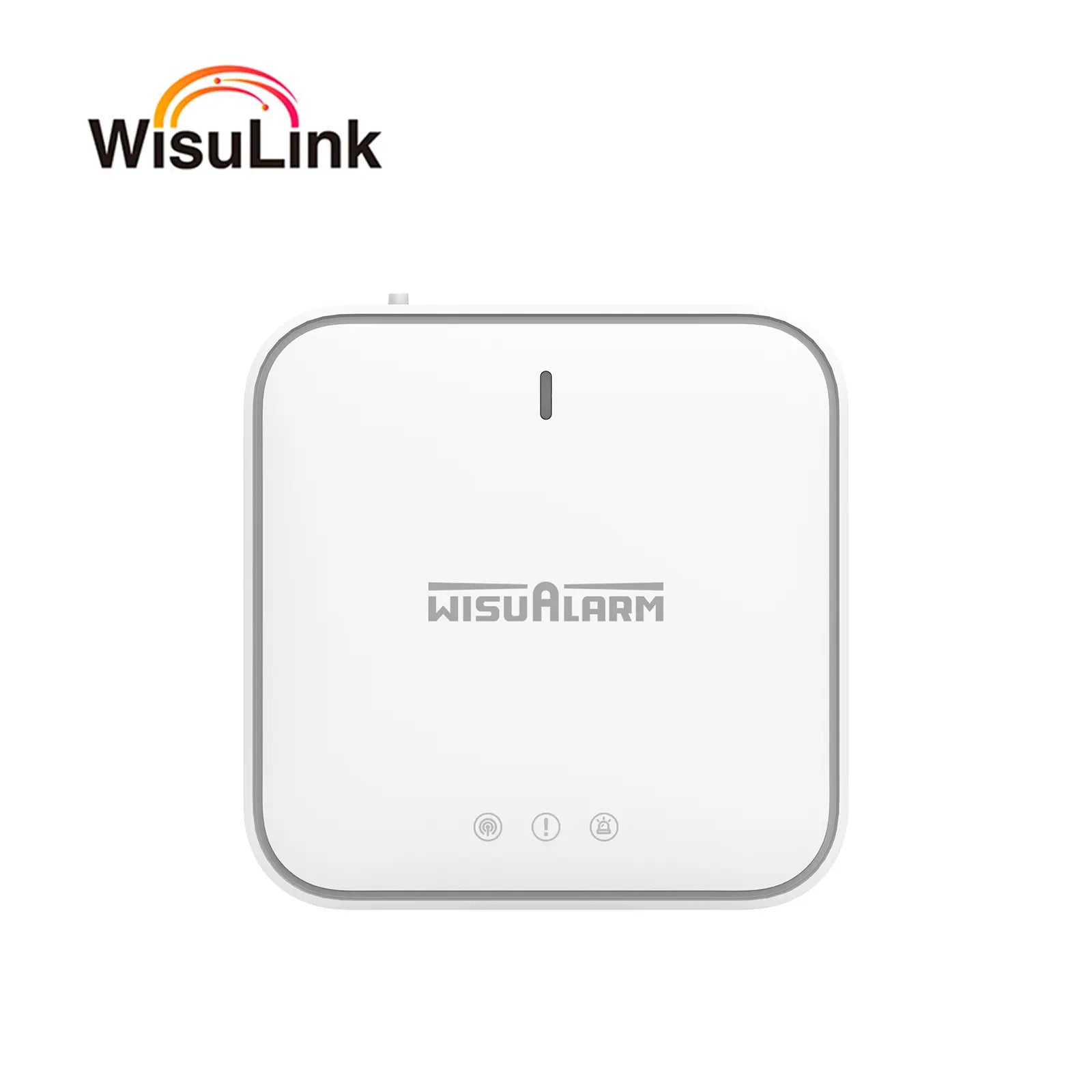
Wisualarm's wireless interlinked alarm system connects smoke, heat and CO alarms through a gateway, creating a centralised home safety system that can be managed without relying solely on physical access to each detector.
Depending on the setup, the same system can also connect other safety devices such as gas and water-leak detectors.
This makes the gateway less about adding another “smart” device and more about making a distributed home safety system easier to manage.
What Matters Most for a High-Ceiling Smoke Alarm?
For a high ceiling smoke alarm or hard-to-reach detector, the most useful features are the ones that solve the access problem.
| Feature | Why it matters |
|---|---|
| Long battery life | Reduces the need for frequent physical access |
| Wireless interconnection | Allows multiple alarms to communicate |
| Remote test | Makes routine testing easier |
| Remote silence | Helps manage confirmed nuisance alarms |
| Alarm location | Makes it easier to identify the triggering detector |
| Gateway / app | Provides more accessible system management |
The important point is that these features work together.
A long-life battery reduces maintenance. Wireless interconnection improves whole-home response. Remote functions make a difficult-to-reach alarm easier to manage.
Are High-Ceiling Smoke Alarms Only a Problem in Large Homes?
No.
The issue isn't necessarily the size of the property.
A single hard-to-reach smoke alarm above a staircase can create the same problem as several detectors installed throughout a large house.
That's why this can matter in:
- Homes with vaulted ceilings
- Open stairwells
- Double-height living rooms
- Apartments with unusually high ceilings
- Converted or older properties
- Multi-level homes
The common factor is simple:
How difficult is it to physically reach the detector when it needs attention?
A Practical Checklist for High-Ceiling Smoke Alarms
Before installation, think about the complete life of the alarm — not just the installation day.
Ask:
- Can the alarm be tested without physically reaching it?
- Can I identify which detector has triggered?
- How often will the alarm need physical access?
- Can multiple alarms communicate wirelessly?
- Is remote silence available?
- Can a gateway provide system status or app notifications?
- How will physical maintenance be carried out when required?
These questions are particularly useful for high ceiling smoke alarms, vaulted ceilings and difficult-to-reach stairwell detectors.
Final Takeaway
A smoke alarm on a high ceiling has the same primary purpose as any other smoke alarm: provide an early warning when smoke is detected.
But its location creates a different maintenance challenge.
For vaulted ceilings, high stairwells and double-height rooms, features such as long battery life, wireless interconnection, remote test, remote silence and gateway-based management can make a meaningful difference.
Recent homeowner discussions show why this matters. When a detector starts chirping several metres above the floor, something as simple as testing or silencing it can suddenly become a ladder job.
The best system isn't necessarily the one with the most smart features.
It's the one that remains reliable, accessible and manageable throughout its service life.



Lascia un commento