





Introduction: Why Scotland is Leading the UK in Fire Safety
In February 2022, Scotland implemented a landmark change in domestic safety legislation. Following the tragic Grenfell Tower fire, the Scottish Government overhauled the "Tolerable Standard" for housing, making it a legal requirement for every home in Scotland—regardless of age or tenure—to have an interlinked fire alarm system.
For Scottish homeowners, "interlinked" is no longer a luxury or a recommendation; it is a statutory obligation. At WISUALARM, we understand that navigating these regulations can be daunting. This guide provides an in-depth look at the science of interlinked protection, the specifics of the Scottish mandate, and how to ensure your property remains both compliant and safe.
Part 1: Decoding the Scottish Interlinked Legislation
The core of the Scottish law is the shift from "isolated" alarms to a "networked" system. The legislation was designed to eliminate "silent zones" in a home, ensuring that a fire in a remote area, such as a garage or a kitchen, is communicated to the sleeping areas immediately.
1.1 What the Law Requires
To meet the Scottish Government’s standard, your home must have:
-
One smoke alarm in the room you spend most of the day in (e.g., the living room).
-
One smoke alarm in every "circulation space" on every floor (e.g., hallways and landings).
-
One heat alarm in every kitchen.
-
All alarms must be interlinked.
Furthermore, if you have a carbon-burning appliance (like a boiler, fireplace, or gas stove), you must also have a Carbon Monoxide (CO) detector, though this does not legally have to be interlinked with the fire alarms (though doing so is highly recommended for maximum safety).
1.2 The Meaning of "Interlinked"
Interlinked means that if one alarm detects smoke or heat, every alarm in the property sounds. In a traditional Scottish tenement or a multi-story detached villa, this "system-wide" alert is the difference between a safe evacuation and a tragedy. It ensures that a fire starting behind a closed kitchen door at 2 AM will instantly wake someone sleeping on the third floor.
Part 2: The Technology of Interconnection – RF vs. Hardwired
Homeowners generally have two paths to compliance: Hardwired or Wireless (Radio Frequency).
2.1 Hardwired Systems
These involve physical cables running between each alarm. While extremely reliable, they are often prohibitively expensive to retro-fit into existing Scottish homes, especially those with lath-and-plaster ceilings or historic cornicing.
2.2 Wireless Interlinking (The Modern Standard)
Modern systems, like those developed by WISUALARM, use high-frequency radio waves (RF) to communicate.
-
The Mesh Network: Unlike a simple point-to-point connection, our devices create a "mesh." If one alarm is at the far end of a large property, it can pass the signal through intermediate alarms to reach the Gateway or the master bedroom.
-
Ease of Installation: Wireless alarms can be installed in minutes without the need for a professional electrician or messy cabling, making them the preferred choice for 90% of Scottish retro-fits.
Part 3: Why Standalone Alarms are No Longer Sufficient
Before 2022, many Scottish homes relied on "9V battery" alarms from local DIY stores. These are now legally insufficient. The science shows that standalone alarms fail for three primary reasons:
-
Audibility Gaps: Modern double-glazing and fire-rated doors effectively block sound. An alarm in a hallway may not reach the required 85 decibels inside a bedroom where someone is sleeping.
-
Maintenance Fatigue: Standalone alarms require frequent battery changes. If a battery dies and isn't replaced, the "safety" is an illusion.
-
Delayed Detection: In a non-linked home, the fire must grow large enough for smoke to travel to the hallway sensor. In an interlinked home, the fire is detected at the source (the kitchen or living room) and signaled globally instantly.
Part 4: Specific Hazards in Scottish Housing Stock
Scotland’s architecture presents unique challenges for fire safety:
4.1 Tenements and High-Density Living
In cities like Glasgow and Edinburgh, the proximity of units means that heat and smoke can transfer through floorboards. While you aren't legally required to link your alarms to your neighbour's, having a robust internal system is vital for early evacuation in high-density stone buildings.
4.2 Rural Homes and Solid Fuel
Many homes in the Highlands and rural areas rely on wood-burning stoves or coal fires. These "combustion appliances" are high-risk. A linked system that includes both heat sensors (near the stove) and smoke sensors (in the corridors) provides the necessary layers of defense.
Part 5: Compliance Checklist for Landlords and Homeowners
If you are selling your home or renting it out in Scotland, you must prove compliance.
-
Sealed Batteries: The law requires alarms to be powered by a "sealed for life" lithium battery (lasting 10 years) or be mains-powered.
-
Grade F1/F2 Compliance: Alarms must meet the relevant British Standards (EN 14604:2005 for smoke and BS 5446-2:2003 for heat).
-
Documentation: Keep your installation records and product certificates ready for home surveys or insurance audits.
Part 6: Future-Proofing with Smart Technology
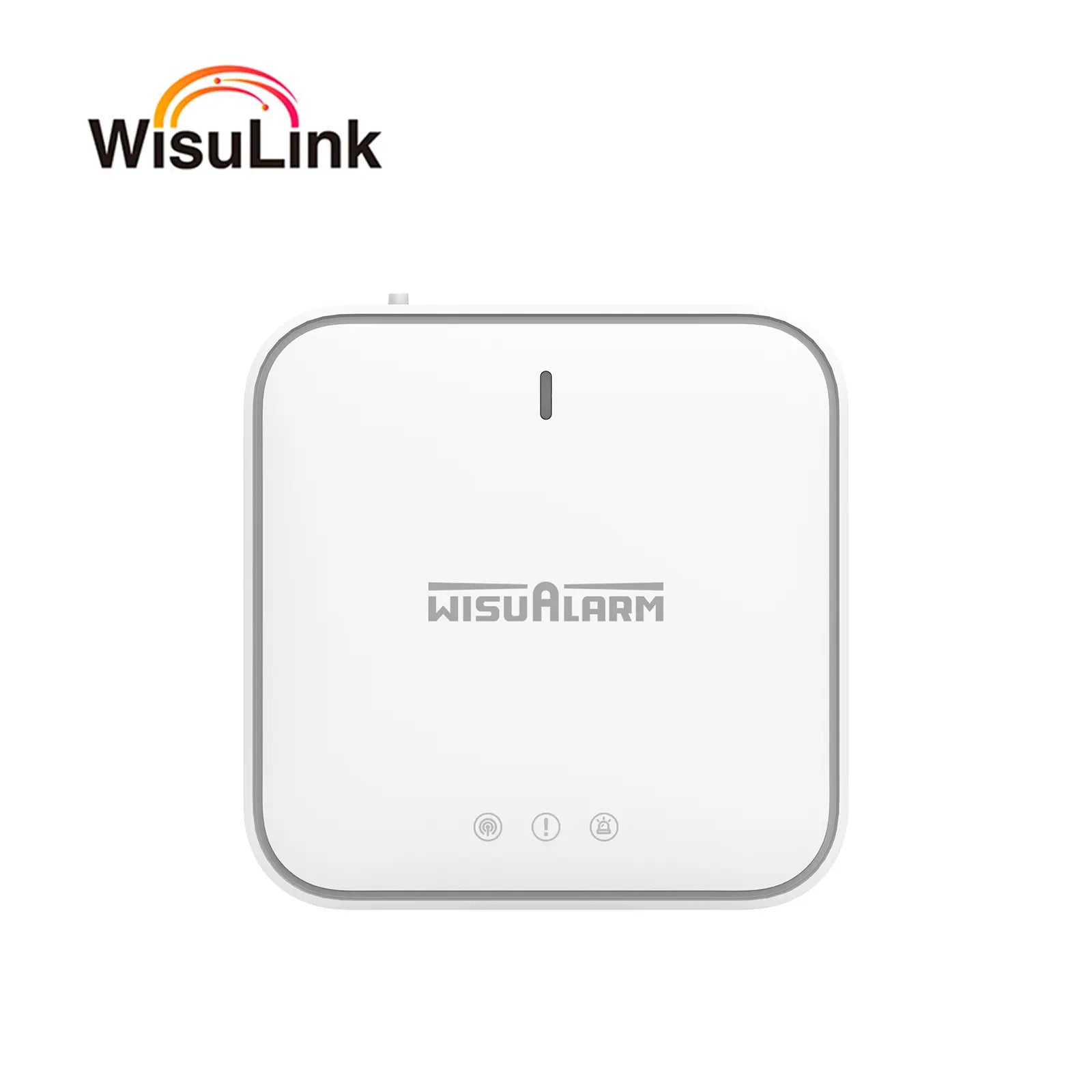
While the Scottish law sets the minimum standard, the future of fire safety lies in Smart Integration. A linked system that connects to a Smartphone Gateway allows you to monitor your home from anywhere. For Scottish residents who travel or own holiday lets in the North, being notified of an alarm via an app is a game-changer.
The WISUALARM Solution: Total Compliance for Scotland
At WISUALARM, we have engineered a range of interlinked alarms specifically to meet and exceed the Scottish Tolerable Standard. Our systems are designed for the modern Scottish home—combining high-tech reliability with a sleek, unobtrusive aesthetic.
Why Choose WISUALARM Interlinked Systems?
-
Instant Wireless Interlinking: Our "One-Go-All-Go" technology ensures that your entire home is alerted in milliseconds. No wiring, no mess, no stress.
-
Scottish Law Compliant: All our smoke and heat alarms feature 10-year sealed lithium batteries and carry the necessary UKCA and CE certifications to pass any home survey.
-
Advanced Sensor Precision: We use split-spectrum photoelectric sensors to reduce "nuisance alarms" (like burnt toast) while maintaining ultra-fast response times to real fires.
-
The Smart Gateway Advantage: Our Interlinked Gateway Kit connects your fire safety network to your smartphone. Get real-time alerts on the West Highland Way or while shopping in Princes Street.
-
Professional Grade for DIY Prices: We bring industrial-standard safety technology directly to the Scottish homeowner, ensuring that compliance doesn't have to be a financial burden.
Don’t Wait for a Home Survey to Secure Your Family.
Ensure your property meets the Scottish legal standard today with WISUALARM’s range of interconnected smoke, heat, and CO detectors.



Laat een reactie achter