

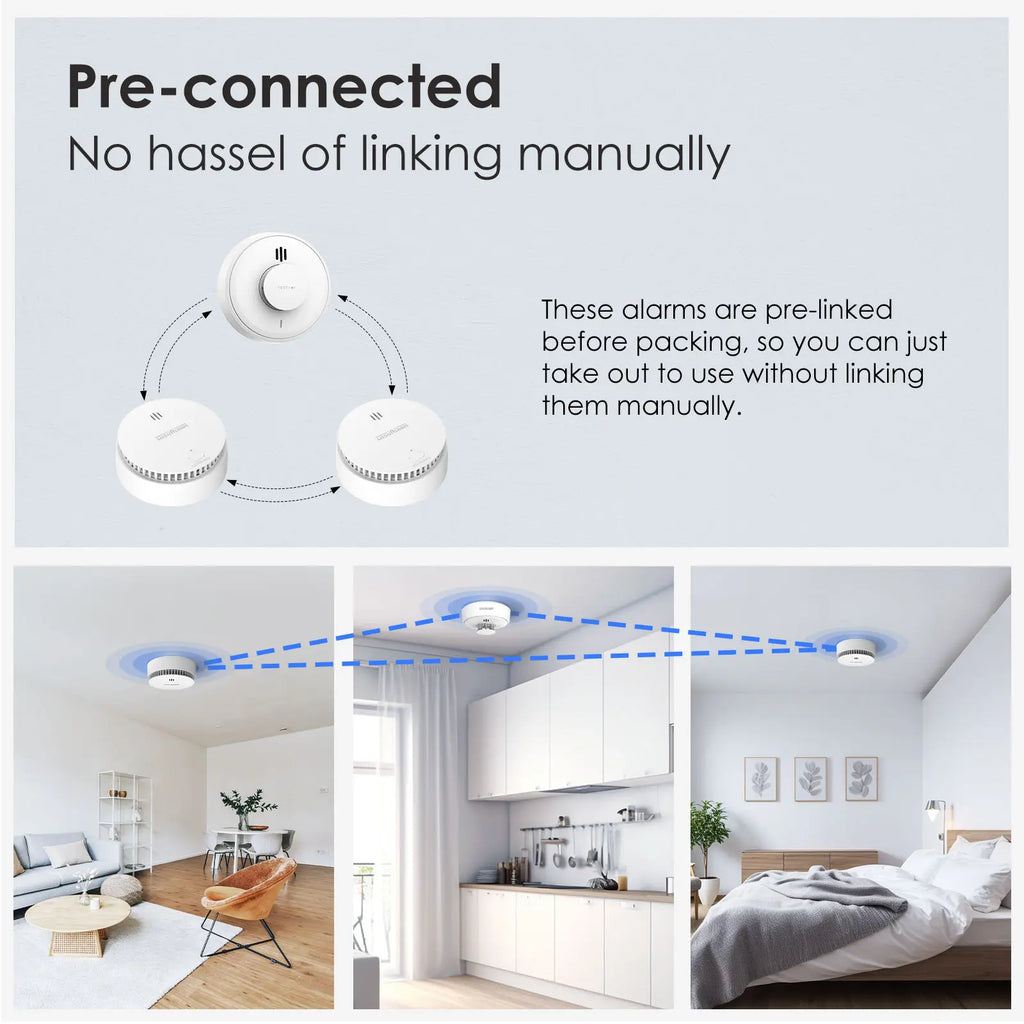
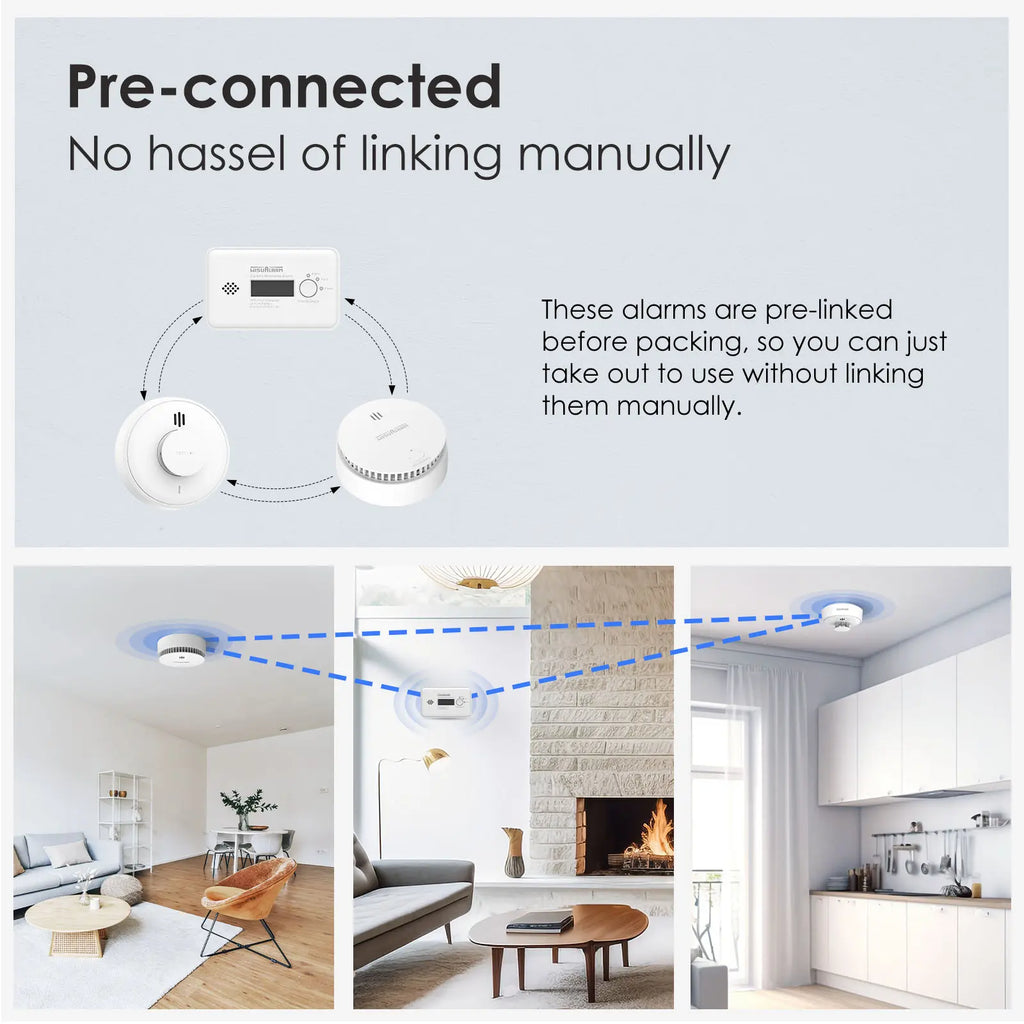
Designed to enhance home safety by detecting rapid increases in temperature. Ideal for kitchens and areas prone to cooking fumes, this alarm senses extreme heat levels and provides crucial early warnings to help prevent fires.

FAQ
FAQ
What is the difference between a heat detector and a smoke detector?
A heat detector responds to changes in temperature, typically activating an alarm when a certain temperature is reached or when there is a rapid increase in temperature. A smoke detector, on the other hand, detects smoke particles and activates when smoke is present, even at lower temperatures. Both serve different purposes and can be used together for better fire protection.
In what situations should I use a heat alarm instead of a smoke detector?
Heat alarms are ideal for locations where cooking or other activities may produce smoke that could trigger false alarms, such as kitchens, attics, and garages. They are also beneficial in areas with high humidity or dust, where smoke detectors might be less reliable.
Where should heat detectors be installed in my home or building?
Heat detectors should be installed in areas where smoke detectors may be less effective, such as kitchens, attics, and garages. They should be placed on the ceiling or high on the wall, at least 4 inches away from walls and other obstructions. Always follow the manufacturer's guidelines for specific installation locations.
How do I maintain my heat detector?
To maintain your heat detector, regularly check it at least once a month to ensure it is functioning properly. Clean the device with a soft brush or vacuum to remove dust and debris. Additionally, replace the batteries annually and replace the unit every 10 years to ensure optimal performance.
Imagine this: You’re mid-way through cooking a Sunday roast, or stepping out of a steamy shower, when a piercing beep cuts through your home. Your smoke alarm is blaring—but there’s...
Carbon monoxide (CO) is often called the "invisible killer"—odorless, colorless, and tasteless, it can silently build up in your home and cause severe illness or even death before you notice...
Picture this: A fire ignites in the basement of your two-story home, triggered by a faulty electrical outlet. Your basement smoke alarm blares—but if you’re upstairs, sound asleep, will you...
Imagine this scenario: You’re at work, buried in a crucial meeting, when a notification pings on your phone. It’s not a text from a colleague or a social media update—instead,...
Few things are more frustrating than dealing with a persistently beeping smoke alarm—especially right after you’ve gone through the trouble of replacing its battery. You follow the instructions to the...
Carbon monoxide (CO) is a silent, invisible threat—but with your Wisualarm Carbon Monoxide Detector, you can protect your home and family with confidence. This guide walks you through unboxing, installation, operation,...
Carbon monoxide (CO)—often called the “silent killer”—is an odorless, colorless gas that can cause severe illness or even death if left undetected. That’s why your carbon monoxide alarm is one...
A 3 bedroom house is a common family home in Scotland, and its layout—whether single-storey, two-storey, or with an attic conversion—directly impacts your smoke alarm requirements. Scotland’s 2022 fire safety...
Carbon monoxide (CO)—often called the “silent killer”—is an invisible, odorless, tasteless gas that can cause severe illness or even death in minutes. Every home with fuel-burning appliances (like gas stoves,...